Assembling a visual archive when life gets in the way
You've gathered your vase, chosen your blooms, arranged the cloth just so — and then life happens. The afternoon light disappears behind a cloud. A petal falls. You get interrupted and come back to find the whole composition has shifted. If you paint florals and still life, you know this feeling intimately.
PAINTING FROM LIFE - ALWAYS THE FIRST CHOICE
Whenever I can, I paint from life. There is simply nothing that compares to having the real subject in front of you — the way light actually falls across a petal, the true depth of colour in a piece of fruit, the subtle shadows beneath a fold of cloth. It develops your artistic eye and keeps the painting alive.
But flowers and fruit don't wait for us. A lush peony that looks glorious on Monday may be dropping its petals by Tuesday - they fade so fast, don’t they? A perfect arrangement of figs or cherries softens and shifts within days. Painting from life is the ideal, but it isn't always possible — and that's exactly why I've made capturing good references a real and intentional part of my process.
CAPTURING YOUR OWN ARRANGEMENTS
Before I ever pick up a brush, I reach for my camera. Here's what works for me:
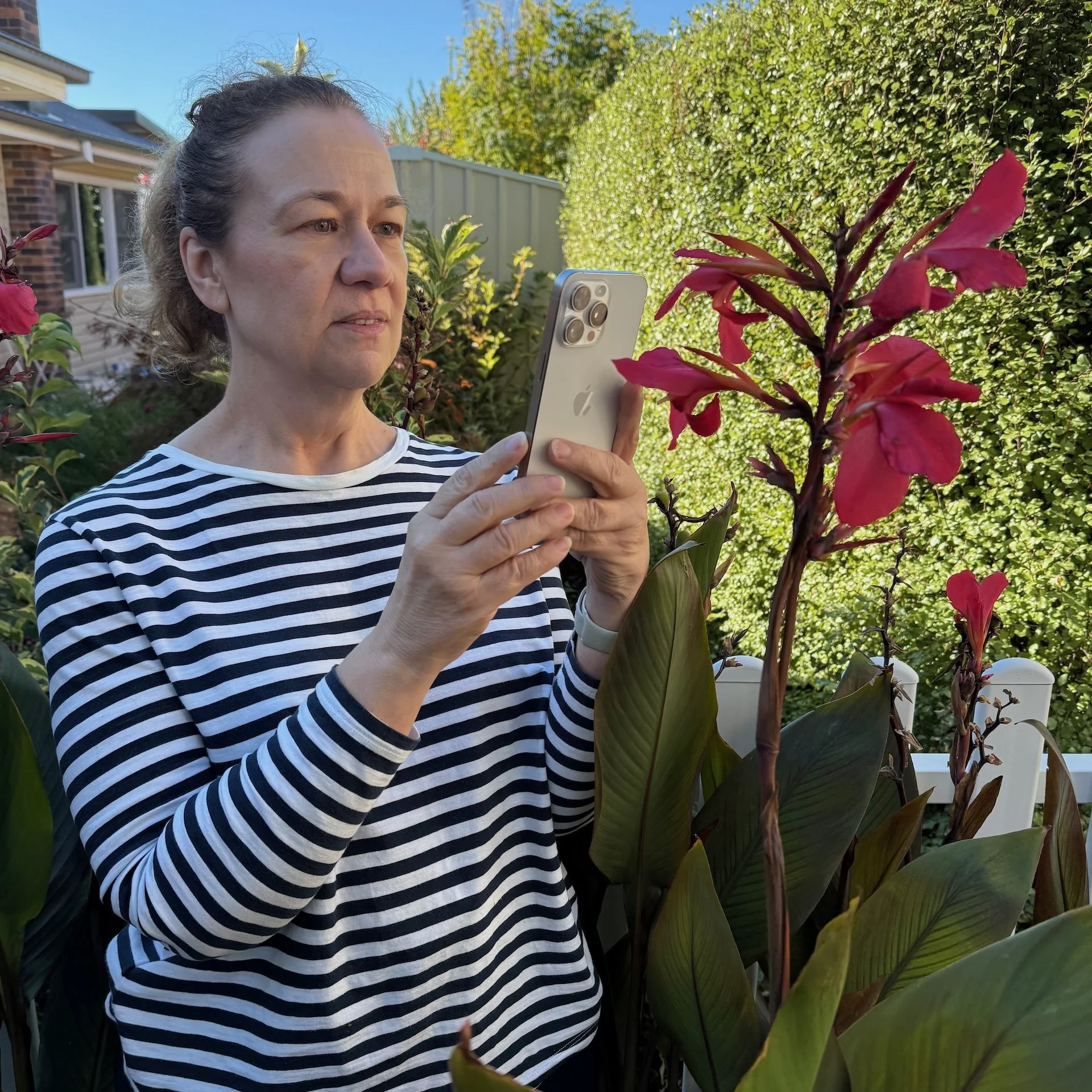
Photograph your arrangement from multiple angles and in different light — don't lock yourself into one composition while you're setting up. The best painting idea often reveals itself later, away from the pressure of the moment.
Shoot wider than you think you need to. If you later decide you want to paint a long horizontal format — say a 30" × 40" — you'll want that extra visual information around the edges.
Don't stress about technical perfection. A slightly soft photo is still useful reference. You're painting from it, not submitting it to a gallery.
Record a short video as you move slowly around the arrangement. Capture the light, the shadows, the way the petals overlap. Don't worry about it being cinematic — just capture everything of interest.
BEAUTY FOUND IN THE WORLD
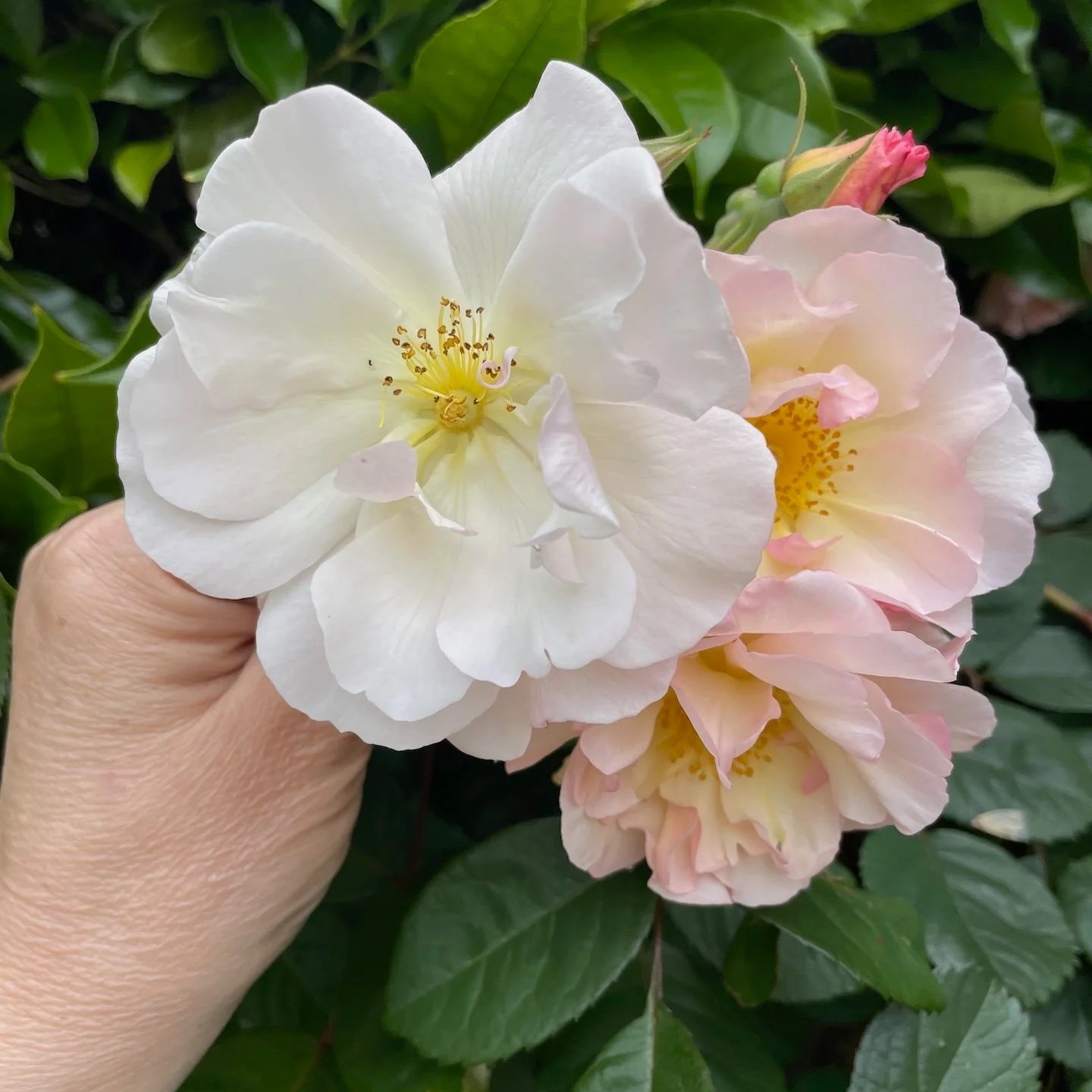
Beautiful blooms captured on a recent walk around Newcastle.
Some of my favourite references come from moments I never planned for. A stunning garden in full bloom. An elaborate floral display outside a florist. A gorgeous little arrangement tucked into the corner of a small shop — those charming, intimate ones that stop you in your tracks and make you reach for your phone before you've even thought about it.
I photograph all of it. Spur of the moment, no hesitation. Gardens, market stalls, café tables, window displays — if something catches my eye, I capture it. You never know what will eventually make its way onto the canvas.
Not every image becomes a painting, and that's perfectly fine. Some photographs simply spark an idea — a colour combination, a mood, a particular quality of light. Others sit quietly in my digital file for months before suddenly feeling exactly right for a new piece. I save everything, and I reference that collection very often. It has become one of my most valuable creative resources.
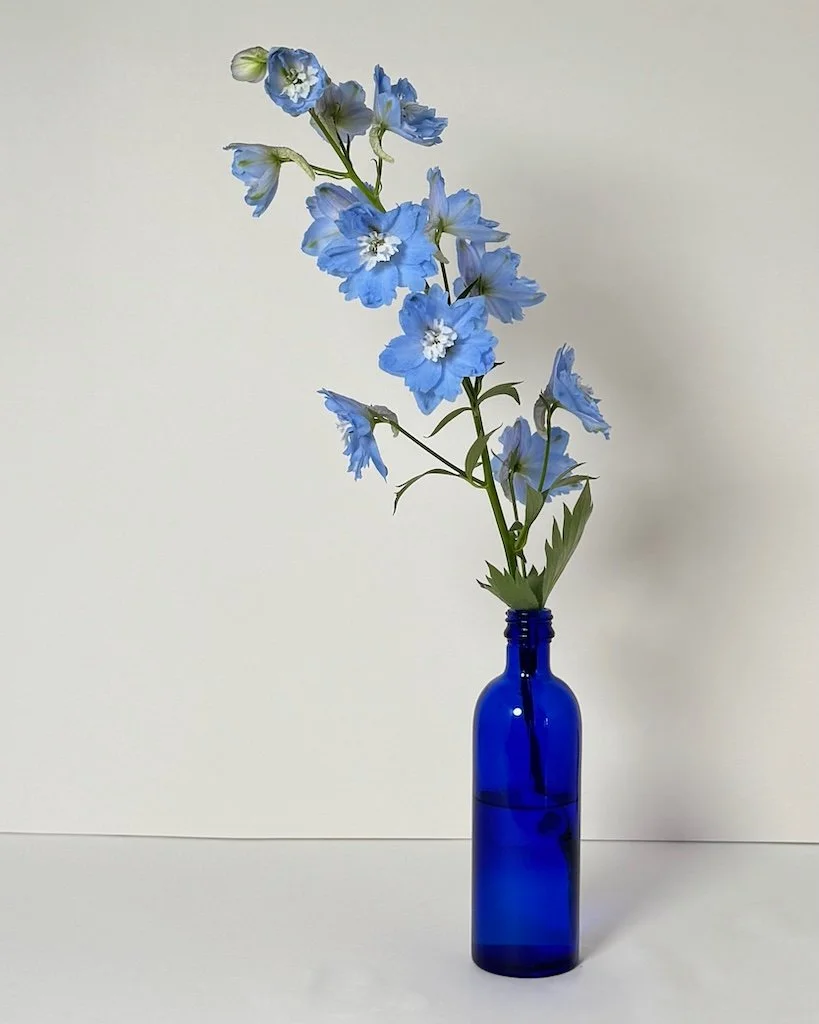
Blue delphinium from my garden. I had this photo on file for over a year before I used it.
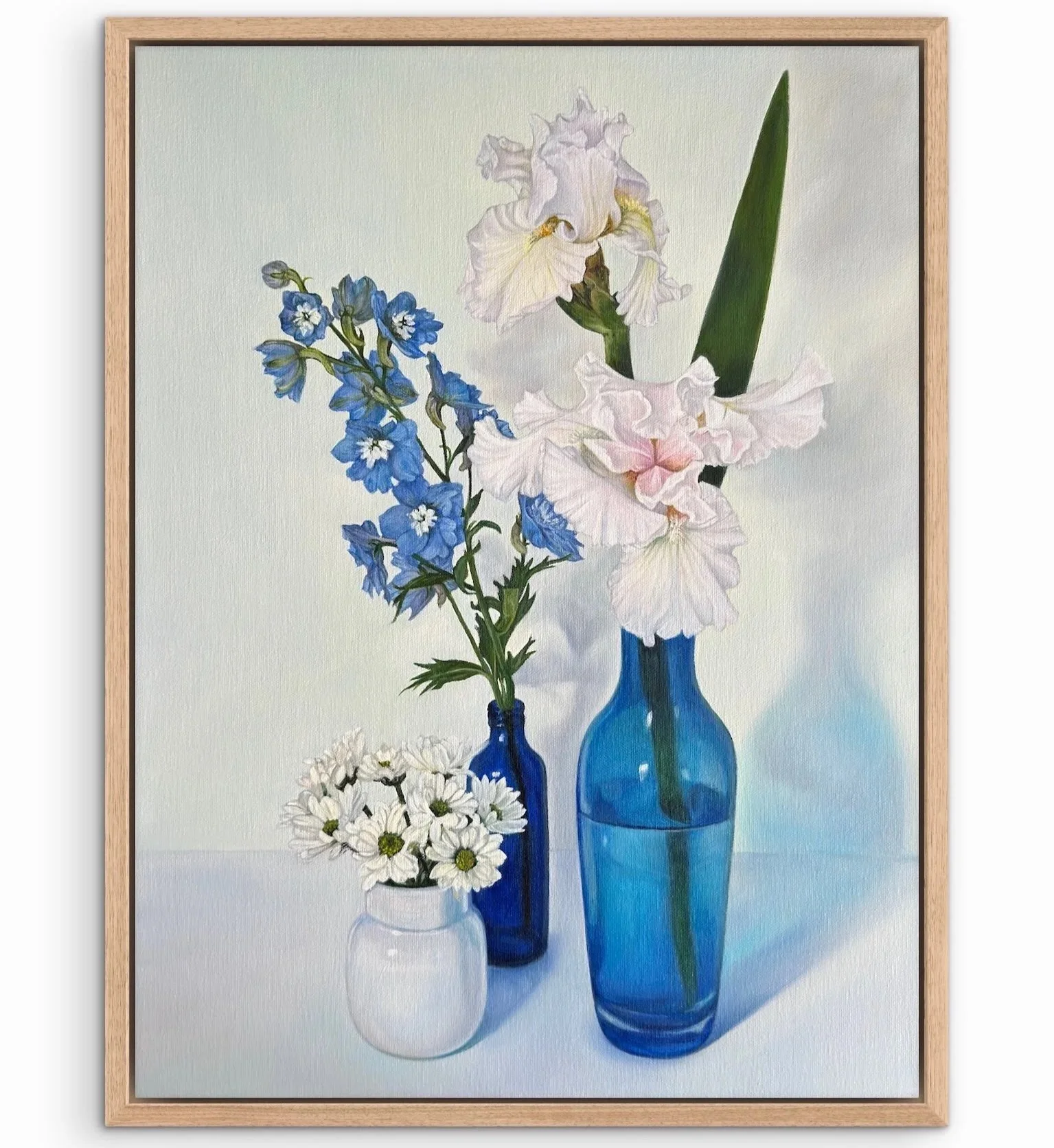
When I started planning ‘My Blue Heaven’ (oil on canvas SOLD) for The Grammar Art Show, there were just the daisies and irises and a big hole that needed filling at the back. The delphiniums were the perfect fit to complete the painting and I was so glad to find them in my resource file.
BACK IN THE STUDIO
All of my photos and videos go into a dedicated folder on my computer, organised by subject and date. On days when I want to paint but don't have a fresh arrangement in front of me, that library is where I turn. If I'm not immediately drawn to a photo, I'll watch the video back — pausing, zooming in, zooming out — until something catches my eye. That frozen frame often becomes exactly the reference I need.
Beyond the practical reference, I also use what I capture to develop ideas in my art journal. A colour note here, a compositional sketch there, a thought about mood or light. The journal is where a snapshot becomes a painting in my mind before it ever reaches the canvas.
So whether it's a bunch of peonies from your own garden, a sunlit lemon on the kitchen bench, or a beautiful display you stumbled across in a little shop — photograph it, film it, save it. Your future painting self will be very glad you did.
STAY IN TOUCH
Do you have a similar process for recording your inspiration or something completely different? Let me know in the comments below.
Thanks so much for being part of this creative journey - I appreciate you keeping me company.
