How a painting actually gets made
There's a version of my process that looks effortless from the outside — a finished piece, the flowers luminous, the light exactly right. What you don't see is the weeks of work it took to get there. So this month, I wanted to pull back the curtain.
WHERE IT STARTS
Most of my work doesn't begin with a visual. It begins with a feeling — something about a particular bloom as I’m walking through my garden, the way afternoon light falls across a tablecloth, a bunch of flowers I picked up at the market or my local florist that I can't stop looking at. The composition comes second, as a way of pinning that feeling down before it slips away. There’s an urgency there that often keeps me awake at night as I think about how I’m going to capture that feeling on canvas.
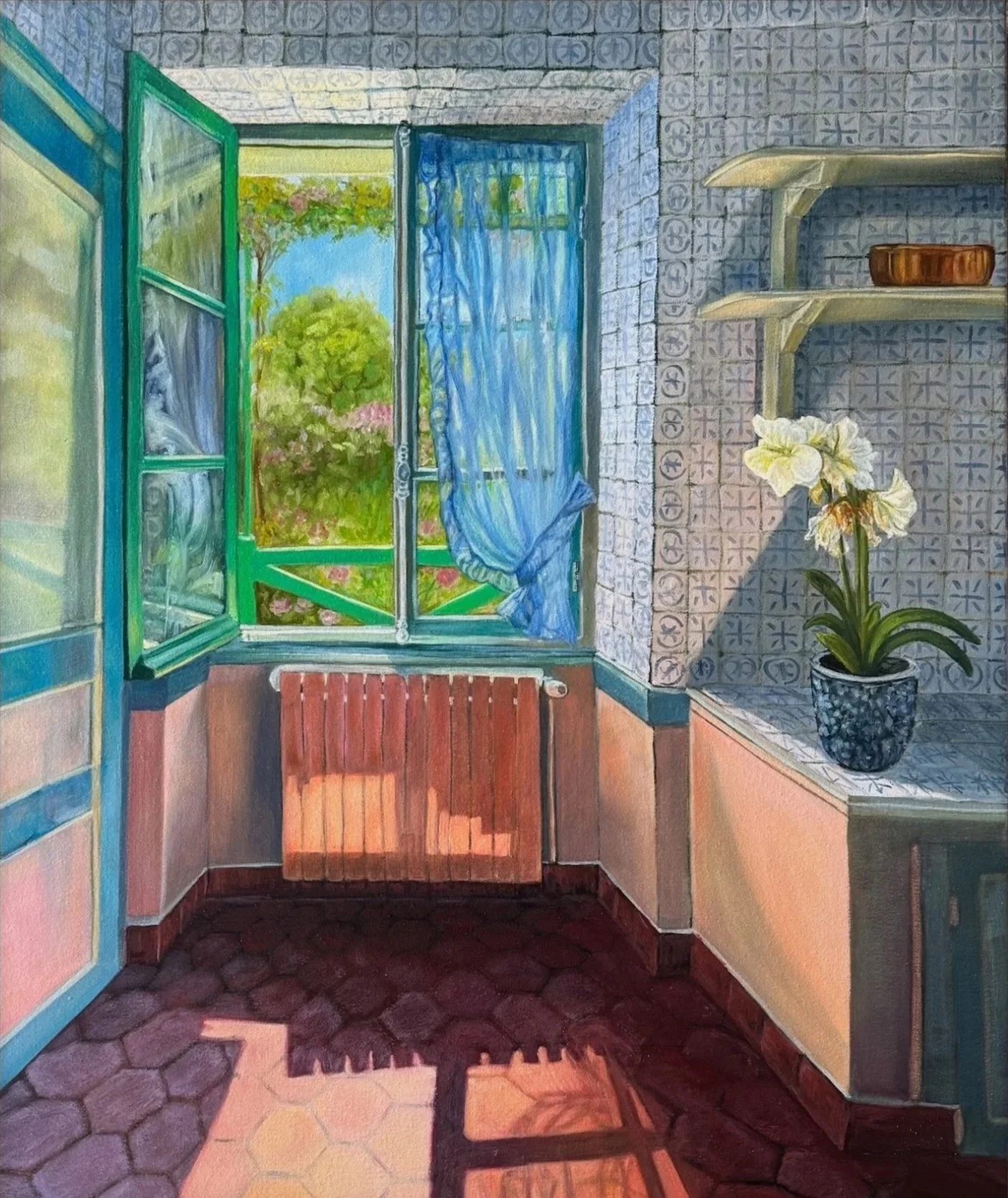
CLAUDE’S KITCHEN, oil on canvas, 2025 (SOLD)
I felt that urgency to paint when I saw this view of Claude Monet’s Kitchen at Giverny. The sun streaming in through the open window from his magnificent garden lit up the entire room like a jewel box. I had so many sleepless nights planning the composition, how I would paint it and the best method and materials to use to get the result I wanted. It was both inspiring and exhausting.
WHY MY PAINTINGS TAKE WEEKS TO FINISH
Oil paint needs time. I work in layers, and each one has to dry fully before I can build on top of it — glazing colour, adjusting value, refining edges. This isn't a constraint I work around; it's fundamental to the luminosity you see in the finished piece. The depth that makes a petal look like a petal and not a flat shape of pink comes from those accumulated layers, each one quietly working beneath the surface.
THE HARDEST PART: THE MIDDLE
Somewhere around week two, almost every painting enters a phase I've come to recognise — and brace for. The work doesn't look wrong exactly. It just looks incomplete in a way that's harder to sit with than wrong. Wrong gives you something to fix. Incomplete just asks you to keep going on faith.
This is where I'm doing the real technical wrestling: correcting colour relationships, adjusting values so the light reads correctly, working edges so some areas are sharp and others dissolve. It's slow, methodical work. It's also the point where my enthusiasm for the piece is at its lowest ebb. The initial excitement has passed. The finish line isn't yet in sight.
What I've learned to do is trust the process rather than the feeling. The painting isn't failing — I'm just in the middle of it.
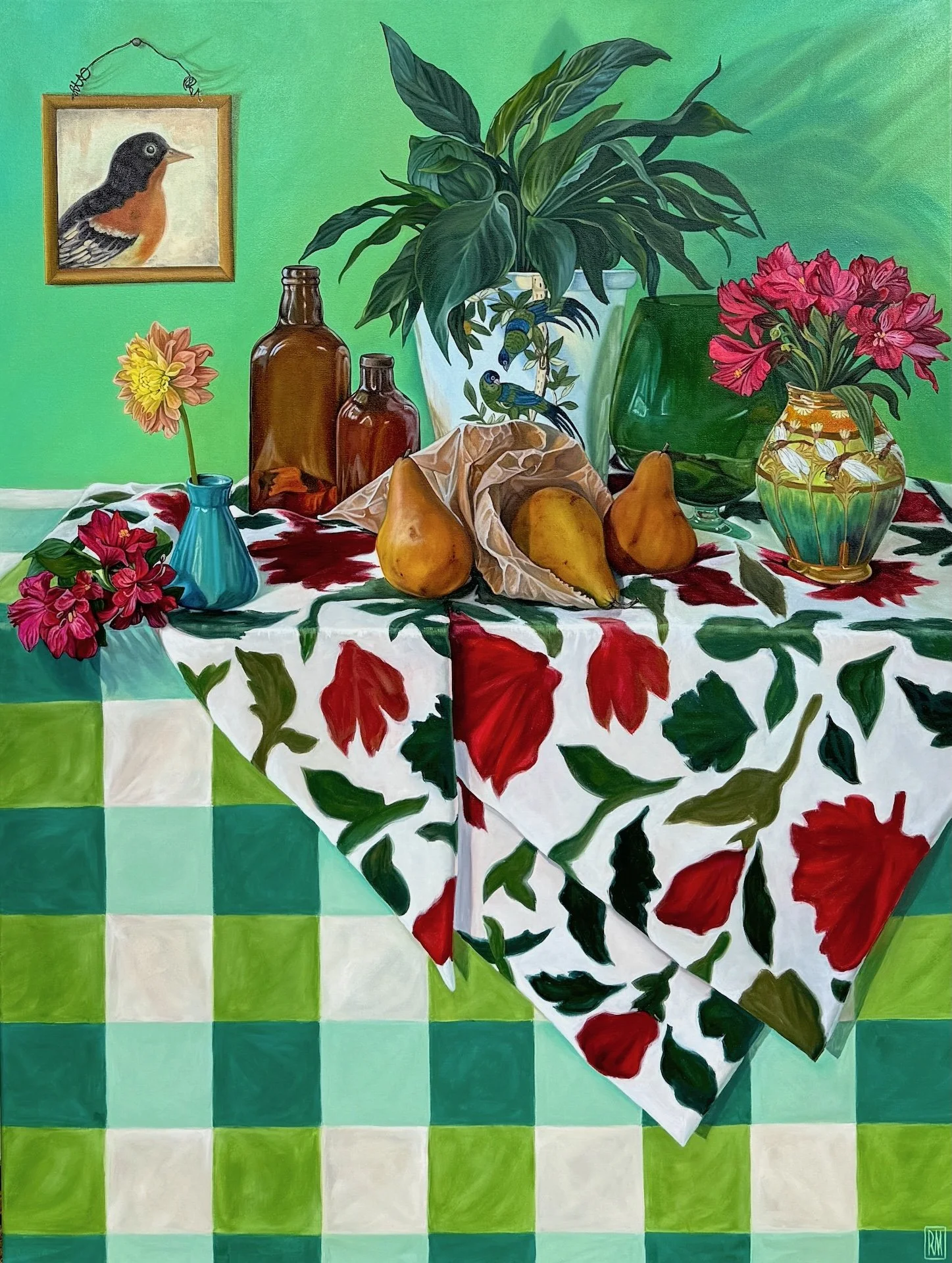
DIARY OF AN ORDINARY LIFE, oil on canvas, 2025 (SOLD)
This very large painting was an absolute ‘beast’. There were so many moments after that initial excitement where I wanted to give up. “What was I thinking” frequently came to mind. So many different surfaces to render but the final result was worth the push.
KNOWING WHEN TO STOP - THE MOST IMPORTANT MOMENT IN THE WHOLE PAINTING
This is the part I want to talk about honestly, because I don't think it gets said enough: stopping at the right moment is a skill, and it's one that still trips me up from time to time.
There's a point in every painting where it's done. Not finished in the sense of technically complete, but done in the sense that the painting has said what it needs to say. That moment is often subtle. Easy to miss. And if I don't catch it and keep painting, the work can go from alive to overworked in just a few strokes. I've ruined paintings this way. Most artists I know have.
What I'm looking for is a kind of wholeness, when every area of the canvas is doing its job, when the light is reading the way I intended, when the flowers have presence without being laboured. I’ll often put the painting somewhere I can casually see it (usually across the room) so I'm not staring at it but simply living with it. That distance often tells me more than close examination does and has proven to be the most useful technique in knowing when a painting is done.
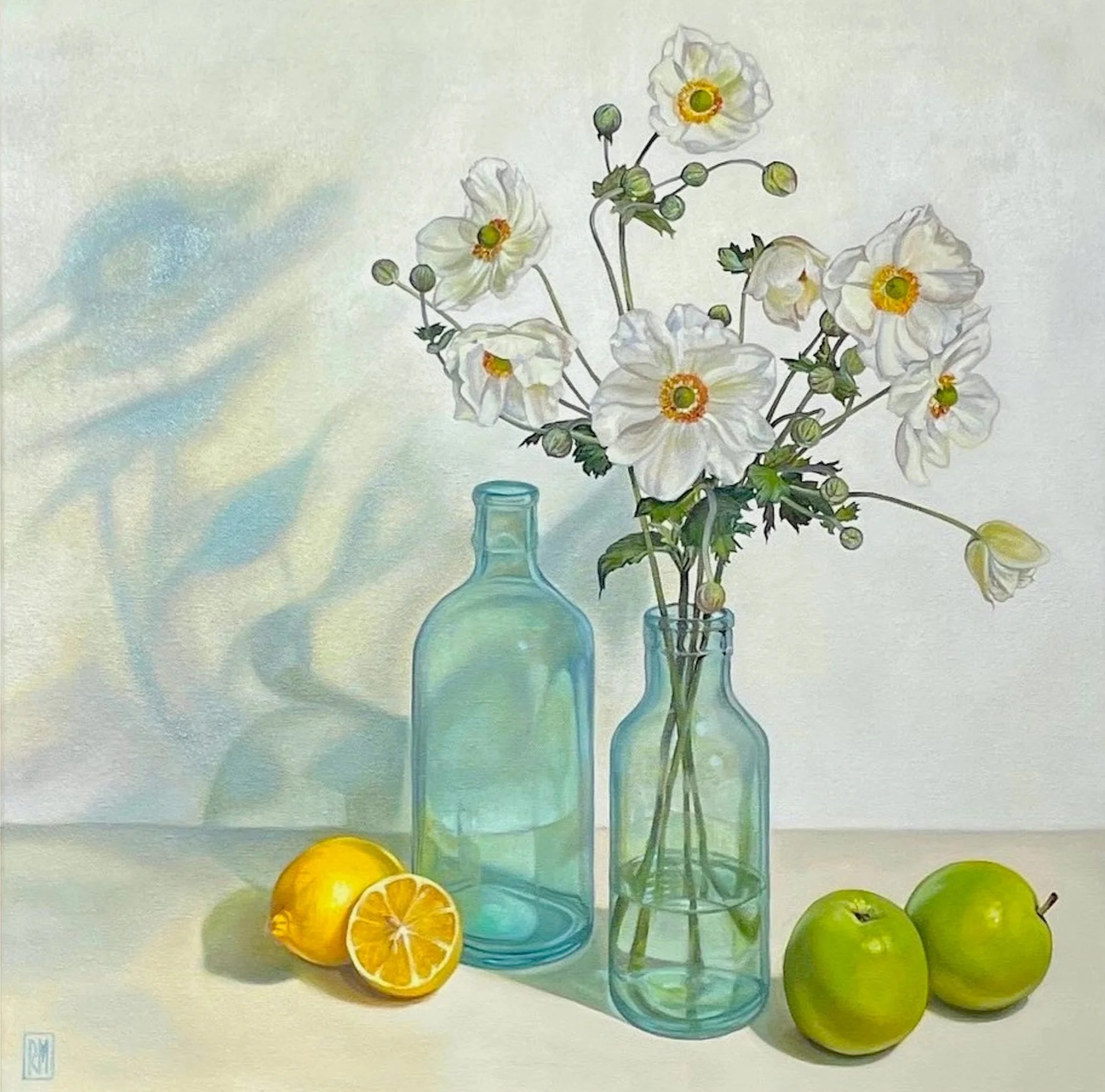
SPRING FLING, oil on canvas, 2024 (SOLD)
The shadows in this painting almost killed me. I reworked them a couple of times before I set it aside and let it breathe. A few weeks staring at it hanging on the wall let me finally be able to call it ‘done’.
NEXT TIME
In my blog next month I’ll be deep diving into the process: techniques and products I use with recommendations of my favourite products and providers.
STAY IN TOUCH
I’ve been away from the easel for a few weeks but I have been quietly working on some new paintings which I hope to have available soon. I’ve passed through that middle phase and now I’m itching to finish them.
If you’d like to see the finished pieces make sure you’re subscribed to my newsletter as my VIP subscribers always have first access to new work, events, discounts and more. You can sign up HERE.
In the meantime, if you have any questions or comments, feel free to leave them below.
Until next time
